Yesterday, I formally concluded the project entitled From Studio to Network – Developing Creative Competencies in the Age of Technology, which was implemented as part of the KPO program for culture. This marked the end of a six-month period of extremely intensive work in several areas of my compositional activity – even though at the same time I was also pursuing other activities, playing concerts in Poland and abroad, composing, producing my own recordings and those of other artists, and writing articles. Professionally, this was one of the most intense periods in my already quite long musical life. I also learned that even an experienced composer, musician, and producer can always learn something new, master technological advancements, and expand their work and knowledge into new areas. These six months have transformed me into a "version after a major technological and competency update." A significant benefit has been not only the new tools I've implemented, but also new professional contacts – people with whom I've had the opportunity to meet, talk, and exchange experiences. More specifically and briefly:
- I undertook a study visit abroad to the Composition Department of the HAMU in Prague, combined with an intensive MaxMSP course led by John MacCallum.
- I also completed three more study visits, this time domestically: to the Electroacoustic Music Studio of the Academy of Music in Kraków (during which I also recorded a significant amount of audio material for new works), the New Media Department of the Academy of Music in Wrocław, and the Chopin University Electronic Music Studio in Warsaw.
- I completed two extensive online courses: one on AI applications in music and one on digital music distribution on the internet.
- I had in-person and online consultations with four expert musicians specializing in the performance of new music on wind instruments, specifically oboe, saxophones, and flutes. As part of these consultations, I also recorded audio material that was used to process and build the electronic layer of the new compositions.
- I conducted my own educational and research activities, developing digital competencies in the field of immersive sound and virtual acoustic environments, as well as the application of AI in musical activities in the broadest sense.
- I implemented a platform for remote work with other musicians, selected through numerous trials, based on internet connections and audio transmission, continuing my collaboration with my distinguished composer colleague from Chicago, Brad Robin.
- I also purchased advanced software and hardware necessary to fully implement the project and its subsequent plans.
- As a result of my research, I wrote an article on the musical applications of artificial intelligence in the process of composing and producing a musical piece – I mentioned it a few days ago, and the text is available in Polish and English here: https://zenodo.org/records/18787416
- And finally, I composed two new pieces incorporating the experiences gained during this project.
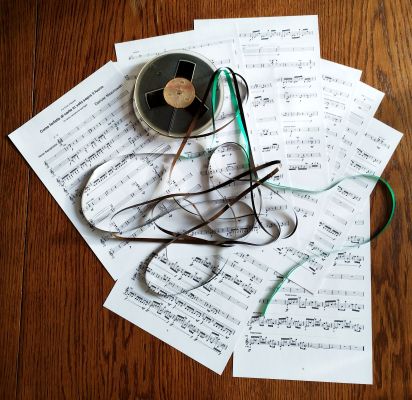
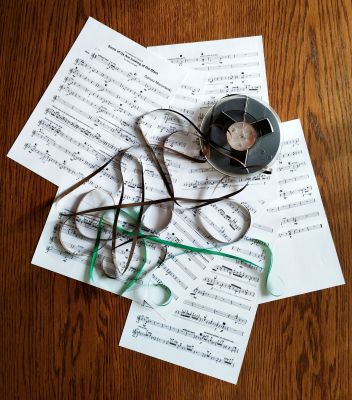
I'd like to devote a few words to these compositions. Both were written specifically for outstanding musicians whom I deeply respect and with whom it's a pure pleasure to collaborate: Some of Us Are Looking at the Stars for oboe and electronic part for Aleksandra Panasik, and Come farfalle di carta in volo sopra il fuoco for tenor saxophone and electronic part for Enzo Filippetti.
With half a year of intensive work behind me, I thank everyone who accompanied me, helped me, and supported me throughout – with new knowledge and ideas, I move forward. Plans are already afoot for further projects, live performances, recordings, and many other endeavors.
The project was co-financed by the European Union's NextGenerationEU fund as part of the National Recovery Plan.