News

On Friday, July 3rd, I invite you to a unique place in Gdańsk: the Romanesque Cellar, a branch of the Archaeological Museum in Gdańsk (pl. Dominikański 1, 80-844 Gdańsk). From 10 a.m. to 5 p.m., you'll be able to immerse yourself in the sounds of my audio installation, Liuto fantasma, which will play throughout the day, creating a unique atmosphere with this unique interior (more information about the installation itself below). On the same day, at 7 p.m., I invite you to the Cellar for my intimate, solo electroacoustic concert. Visiting the Romanesque Cellar (and the installation's presentation) will continue as usual during opening hours – just a reminder that you can also enter it with your Gdańsk Resident Card. Both events will be part of this year's CAPPELLA ANGELICA period instruments festival: https://www.ca2026.pl/ - you can also find a link to book my concert here (as well as other festival concerts): https://ekobilet.pl/fundacja-silva-rerum

This year, I'll have the pleasure of inaugurating this incredibly interesting festival, and don't be fooled by the "historical instruments" hype, as history and the present will intertwine throughout – interiors and instruments, including modern ones, and technologies straight out of the 21st century. It's worth making time for all the events; you can find the full program on the festival website.

The festival is made possible thanks to the financial support of the City of Gdańsk / City of Gdańsk

Organizer:  Silva Rerum arte & fund

Curator: Maja Miro
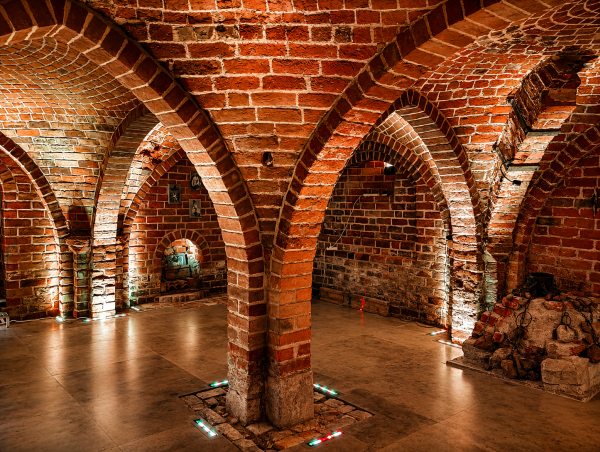

Liuto fantasma is an electroacoustic audio installation inspired by the figure of Diomedes Cato. Its primary source material consists of lute recordings subjected to both subtle transformations and radical processes that often completely obscure their original identity.

The resulting sonic landscape is dreamlike and dark, evoking a kind of musical summoning of spirits – appearing as distant echoes, fleeting sound masses, and structures emerging from silence. Through the techniques and language of electroacoustic music, the space of the Romanesque Cellar becomes immersed in a constantly evolving acoustic environment, where sounds seem to arrive from different directions and distances.
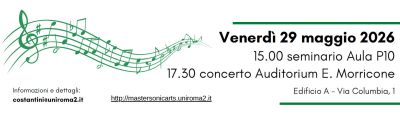

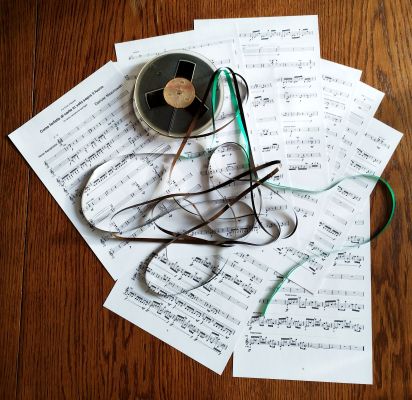
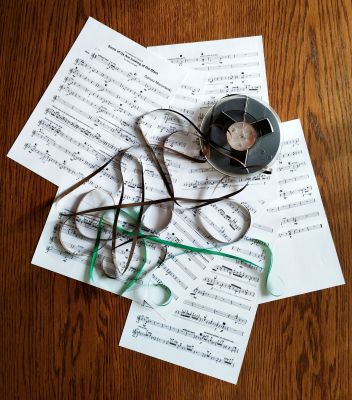
Tomorrow will be the world premiere of my composition "Come farfalle di carta sopra il fuoco" for tenor saxophone and electronic part (tape) in Rome, at the Auditorium E. Morricone of the University of Roma Tor Vergata. The piece was written for the distinguished saxophonist Enzo Filippetti, who will, of course, perform the instrumental part. The concert will be held as part of the Master in Sonic Arts - Technologie e arti del suono project (artistic direction: Giovanni Costantini and Giorgio Nottoli) – beginning at 5:30 pm. Earlier, at 3 pm, a seminar will be held in Auditorium P10, during which I'll talk about the piece and its compositional process. More information and the full program can be found here: http://mastersonicarts.uniroma2.it/2026/05/27/il-soffio-policromo-seminario-concerto/

The trip to Rome was supported by my hometown, for which I am also very grateful. It was funded by the City of Gdańsk as part of the Gdańsk Cultural Scholarship Mobility Fund.

Composing "Come farfalle di carta sopra il fuoco" was part of my project titled "From Studio to Network – Developing Creative Competencies in the Age of Technology," which was implemented as part of the KPO program for culture. Co-financed by the European Union's NextGenerationEU fund as part of the National Recovery Plan.


The next edition of the Gdańsk in Vilnius festival (Gdanskas Vilniuje) will take place in Vilnius from May 21st to 24th. As part of this event, we'll be playing a concert on Friday, May 22nd, featuring a wide variety of pieces – from early music performed on acoustic instruments to contemporary compositions featuring electronics, or even entirely electroacoustic. The repertoire will also include two of my pieces, "Water" (from the "Metropolis Balticum" program) and "Madmen in the Snow." It's a very interesting combination, so I encourage everyone who's in Vilnius at that time to attend. More information about the entire festival, including locations, can be found here: https://www.facebook.com/events/1273466050959725, at the end of this post, I'll provide a detailed program for our concert (https://www.facebook.com/events/1454064572925860), which will feature:
Maja Miro – period flute, fife from the Baltic Sea bottom, soma pipe
Weronika Kulpa – period cello
Anna Wiktoria Swoboda – theorbo
Dariusz Mazurowski – synthesizers, samples, computer, effects


Concert program:
1. Water / Dariusz Mazurowski, Metropolis Balticum, 2023
2. When She Cam Ben, She Bobbed , “A Curious Collection of Scots Tunes”, ca. 1740
3. Flow, my tears / John Dowland, “The Second Booke of Songes”, 1600
4. Readings Ground / John Walsh, “The Division Flute”, 1706
5. ἄβῠσσος revisited / Maja Miro, 2025
6. Mikroimprowizacja z „Melodią” Magdaleny Garbeckiej / 2021
7. Interaquie / Maja Miro, 2024 & Jenny Pluck Pears / John Playford, “The Dancing Master”, 1651
8. Chanson francais / anonim z XVII-wiecznego rękopisu
9. Weepe You No More / John Dowland, “The Third Booke of Songes”, 1603
10. Madmen in the Snow / Dariusz Mazurowski, 2017
11. Mikroiprowizacja z „Echem” Anny Janowicz / 2021
12. жыццё і смерць і больш нічога / Maja Miro, 2024
13. Fy gar rub her o'er with Straw / James Oswald, “Collection of Curious Scots Tunes”, ca. 1743
14. Division on a Ground / John Walsh, “The Division Flute”, 1706
15. Mikroimprowizacja z „Un Flauto dal fondo el Mar Baltico” Krzysztofa Jurczaka / 2021
16. Byliśmy jak dwie cząstki / Maja Miro, 2023
17. The Hole in the Wall / Playford, “The Dancing Master”

I invite you to the Artists' Colony in Gdańsk (Aleja Grunwaldzka 51, 80-241 Gdańsk Wrzeszcz), where the Black Room will host the premiere of my piece (They Are Everywhere) this Friday, May 8th. I created it specifically for this incredibly interesting project, conceived by Sylwester Galuschka (thank you for the invitation!). Performances will take place from 6:00 PM to 10:00 PM, and I'll be on-site and available to listeners during this time. After the premiere, you can listen to the piece from May 10th to 31st, daily at 7:00 PM. The Black Room is part of the "KANON" project, which is co-financed by the City of Gdańsk. Patronage: Glissando | Radio Gdańsk | Trójmiasto.pl | Anxious Musick Magazine | ImproSpot. The Black Room is the first sound gallery in Poland. It was created as a project in 2022 and has been implemented since then thanks to the support of the City of Gdańsk in the form of annual grants and from funds transferred from 1.5% of tax to the Kolonia Artystów foundation.

https://www.facebook.com/events/1478893117035207/?acontext=%7B%22event_action_history%22%3A[%7B%22mechanism%22%3A%22attachment%22%2C%22surface%22%3A%22newsfeed%22%7D]%2C%22ref_notif_type%22%3Anull%7D


I'm delighted to announce that on May 29th, the Ennio Morricone Auditorium at the University of Rome Tor Vergata will host the premiere of my new composition, "Come farfalle di carta in volo sopra il fuoco," for tenor saxophone and electronic part. I wrote it for the distinguished musician and wonderful man, Enzo Filippetti. And, of course, he will perform the instrumental part in this piece. The concert will be held under the auspices of the Master in Sonic Arts program. I sincerely thank the director of this program, Professor Giovanni Costantini, for the invitation, and Enzo for his help and valuable advice on performance matters, thanks to which I was able to fully utilize the instrument's potential, of course in combination with electronics. The trip to Rome was supported by my hometown, for which I am also very grateful. It was funded by the City of Gdańsk as part of the Gdańsk Cultural Scholarship Mobility Fund.


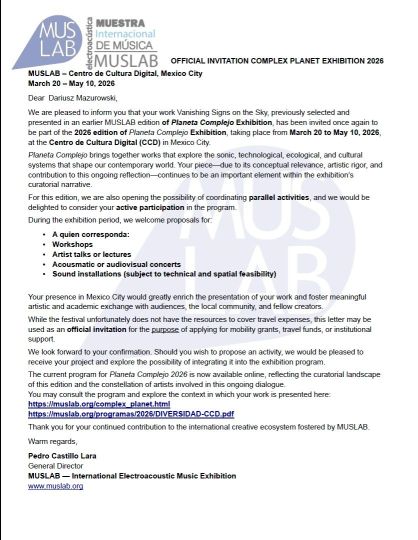
This Friday, March 20th, the next edition of the MUSLAB – Planeta Complejo festival begins at the Centro de Cultura Digital (CCD) in Mexico City. It will run until May 10th and bring many interesting events, all related to electroacoustic music. Many works from around the world will also be presented, and I'm especially pleased to be invited to participate in this event again. If memory serves, my music first appeared at the Muslab festival in 2015, so it's been over 10 years of regularly presenting my compositions.


While recently publishing my extensive text on the use of AI in music, I realized I had quite a bit of other material I'd been preparing for various scientific conferences, lectures, and other occasions. And these texts could, of course, be publicly available to anyone potentially interested. So I decided to gradually publish them in the open scientific repository https://zenodo.org/, created over a decade ago by CERN. It's an incredibly rich, interdisciplinary collection—certainly worth recommending. Currently, there are five of my texts there (including one co-written with Tomasz Misiak), all of which can be found here: https://zenodo.org/search?q=metadata.creators.person_or_org.name%3A%22Mazurowski%2C%20Dariusz%22&l=list&p=1&s=10&sort=bestmatch - each in English and Polish, as a PDF file (which you can read directly on the website or download). Specifically, these are the following titles:

1. Artificial Intelligence in Music Composition and Production

2. Interaction between a live instrument and the electronic part on the example of accordion music the sound perception from the points of view of the composer and performers

3. Acoustic Space and Sound Environment: The Philosophy and Aesthetics of Soundscapes on the Example of Metropolis Balticum (Urbana Landscape)

4. Space, Diffusion, Perception Selected Issues Concerning the Spatiality of Sound in Electroacoustic Music

5. The Accordion as a Metaphorical Acoustic Synthesizer in Electroacoustic Music. An Outline of Extended Performance Techniques Based on the Composer's Own Works


All available free of charge under the Creative Commons Attribution 4.0 International (CC BY 4.0) license.

Yesterday, I formally concluded the project entitled From Studio to Network – Developing Creative Competencies in the Age of Technology, which was implemented as part of the KPO program for culture. This marked the end of a six-month period of extremely intensive work in several areas of my compositional activity – even though at the same time I was also pursuing other activities, playing concerts in Poland and abroad, composing, producing my own recordings and those of other artists, and writing articles. Professionally, this was one of the most intense periods in my already quite long musical life. I also learned that even an experienced composer, musician, and producer can always learn something new, master technological advancements, and expand their work and knowledge into new areas. These six months have transformed me into a "version after a major technological and competency update." A significant benefit has been not only the new tools I've implemented, but also new professional contacts – people with whom I've had the opportunity to meet, talk, and exchange experiences. More specifically and briefly:

- I undertook a study visit abroad to the Composition Department of the HAMU in Prague, combined with an intensive MaxMSP course led by John MacCallum.

- I also completed three more study visits, this time domestically: to the Electroacoustic Music Studio of the Academy of Music in Kraków (during which I also recorded a significant amount of audio material for new works), the New Media Department of the Academy of Music in Wrocław, and the Chopin University Electronic Music Studio in Warsaw.

- I completed two extensive online courses: one on AI applications in music and one on digital music distribution on the internet.

- I had in-person and online consultations with four expert musicians specializing in the performance of new music on wind instruments, specifically oboe, saxophones, and flutes. As part of these consultations, I also recorded audio material that was used to process and build the electronic layer of the new compositions.

- I conducted my own educational and research activities, developing digital competencies in the field of immersive sound and virtual acoustic environments, as well as the application of AI in musical activities in the broadest sense.

- I implemented a platform for remote work with other musicians, selected through numerous trials, based on internet connections and audio transmission, continuing my collaboration with my distinguished composer colleague from Chicago, Brad Robin.

- I also purchased advanced software and hardware necessary to fully implement the project and its subsequent plans.

- As a result of my research, I wrote an article on the musical applications of artificial intelligence in the process of composing and producing a musical piece – I mentioned it a few days ago, and the text is available in Polish and English here: https://zenodo.org/records/18787416

- And finally, I composed two new pieces incorporating the experiences gained during this project.

I'd like to devote a few words to these compositions. Both were written specifically for outstanding musicians whom I deeply respect and with whom it's a pure pleasure to collaborate: Some of Us Are Looking at the Stars for oboe and electronic part for Aleksandra Panasik, and Come farfalle di carta in volo sopra il fuoco for tenor saxophone and electronic part for Enzo Filippetti.

With half a year of intensive work behind me, I thank everyone who accompanied me, helped me, and supported me throughout – with new knowledge and ideas, I move forward. Plans are already afoot for further projects, live performances, recordings, and many other endeavors.

The project was co-financed by the European Union's NextGenerationEU fund as part of the National Recovery Plan.